What Makes a Great Dog Training Treat?

When it comes to training your dog, choosing the right reward can make all the difference. But with so many dog treats available, how do you know which ones are best?
According to the experts at Guide Dogs, the answer might be simpler than you think.
At Black Hawk, we're proud to feed and support Guide Dog puppies throughout their training journey. And as it turns out, the same Black Hawk kibble that provides their everyday nutrition also plays an important role in their training.
So, what makes a great dog training treat?
The best training treat might already be in your cupboard
You might assume that effective dog training requires special treats, but that's not necessarily the case.
"I always get asked what is the best training treat to use and my answer is always the same. It's their regular kibble that you've got at home in the cupboard that you use for their dinner."
For many dogs, their regular dry food can be a great training reward. It's convenient, easy to portion and something they're already familiar with.
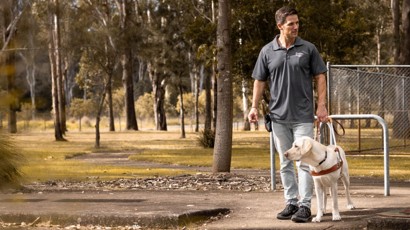
And it's exactly the approach used at Guide Dogs.
"And Black Hawk is an excellent example of this. And it's what we use here at Guide Dogs."
Why does the quality of your dog's training treats matter?
Training a dog takes practice, patience and repetition. Whether you're teaching a new behaviour or reinforcing something they've already learned, you'll likely be rewarding your dog many times throughout a session.
As the trainer explains, repetition is important for achieving consistent results.
But all those little rewards can add up.
If you're regularly offering extra treats on top of your dog's usual meals, it's easy to lose track of how much they're eating.
That's why choosing a nutritionally complete, balanced food for training can be a practical option, particularly when you're rewarding your dog frequently.
By using their regular kibble, you can reinforce positive behaviours while keeping track of their daily food intake.
How to avoid overfeeding your dog during training
One of the most useful tips from the Guide Dogs trainer is also one of the simplest: start each day with your dog's daily food allowance in a treat pouch.
Here's how it works:
- Measure your dog's daily food allowance. Use the feeding guide on your dog's food packaging as a starting point, adjusting for their individual needs.
- Fill your treat pouch. Set aside some or all of their measured kibble to use as rewards throughout the day.
- Reward positive behaviour. Use pieces of kibble to reinforce the behaviours you're teaching, whether that's sitting, staying or coming when called.
- Serve what's left at mealtime. Any kibble remaining in the pouch can be added to your dog's bowl as part of their usual meal.
"At the end of the day come dinner time, empty the treat pouch into the bowl. That way I know I'm not overfeeding my dog."
It's a simple way to make training part of your everyday routine without continually adding extra food to your dog's diet.
Good nutrition supports great training
At Black Hawk, we believe every dog deserves quality nutrition to help them thrive, whether they're learning their first commands or training for an extraordinary role.
That's why we're proud to provide Black Hawk food to Guide Dog puppies as they grow, learn and develop the skills they'll need for the future.
Using their regular kibble as a training reward brings together two important parts of caring for your dog: good nutrition and positive reinforcement.
And while every dog has different preferences, regular kibble can be a convenient, nutritious and effective reward for many food\-motivated dogs.
Make every reward count
Great dog training isn't necessarily about having the fanciest treats. It's about finding what motivates your dog, rewarding the right behaviours and being consistent.
By using your dog's regular food during training, you can encourage learning while keeping their daily nutrition in mind.